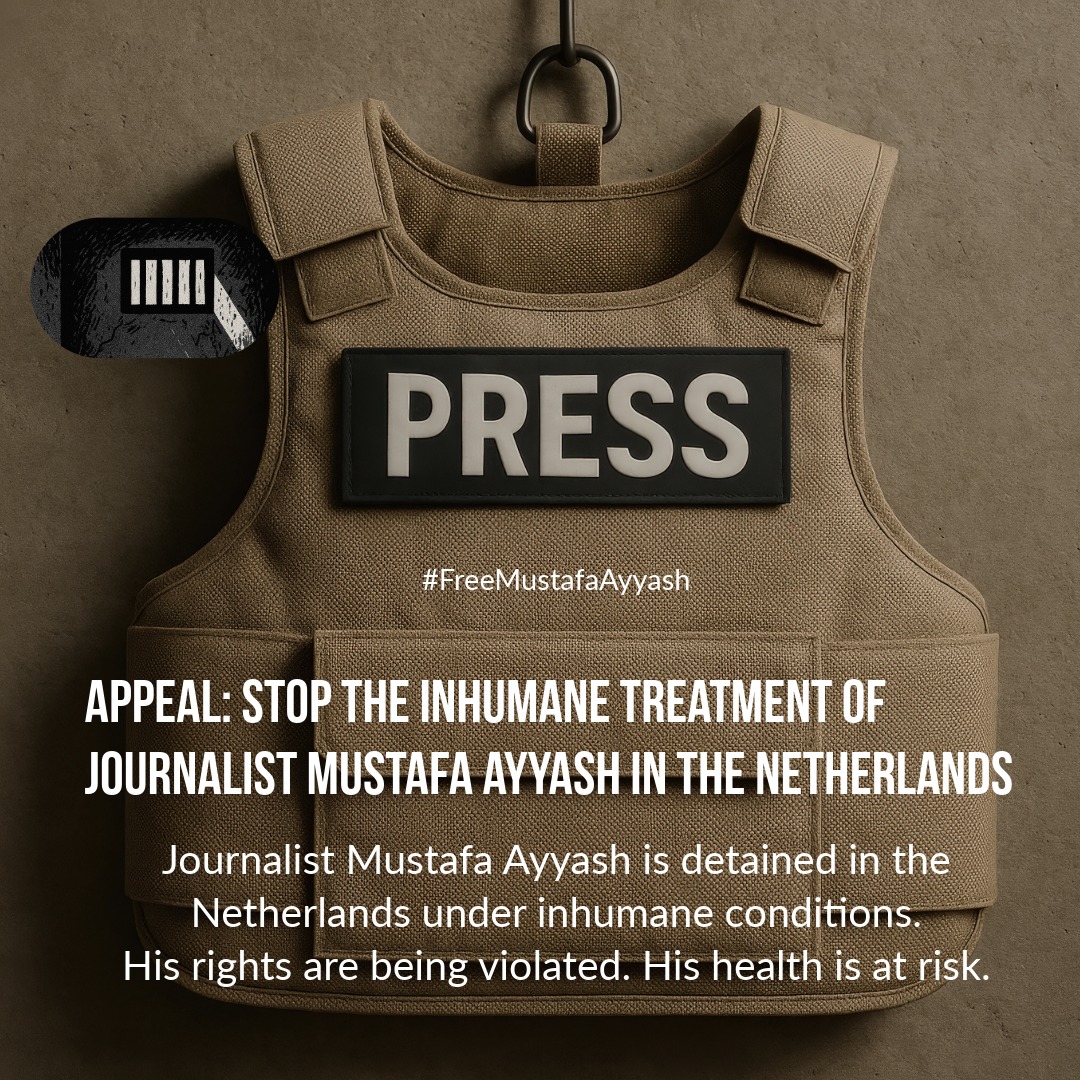
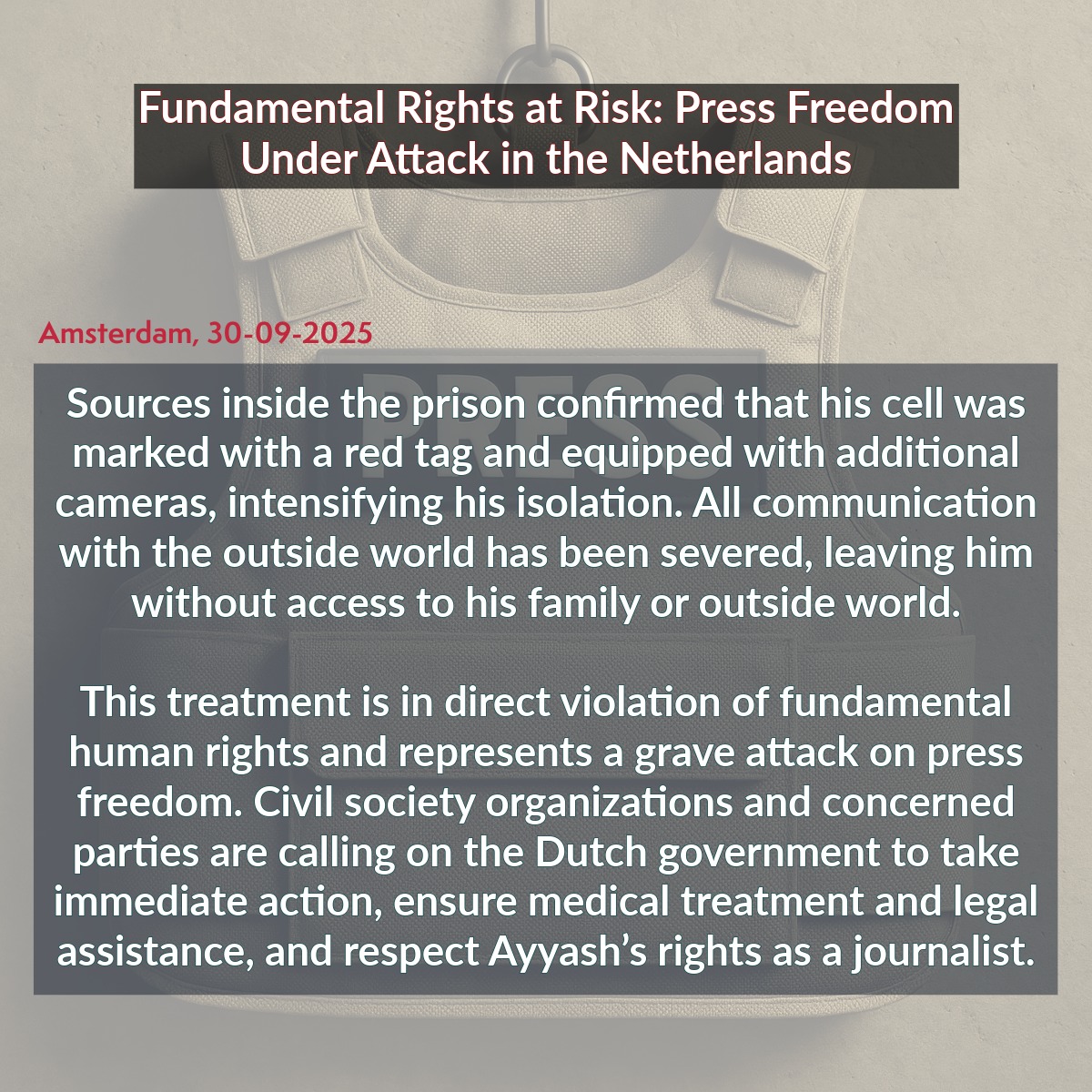
.png)
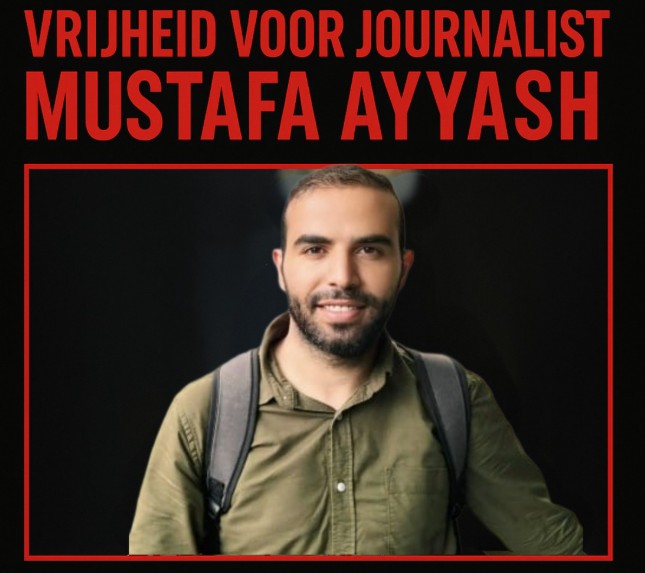
Wat in Gaza niet lukte, dreigt in Nederland te gebeuren ΓÇô Stichting Handala
Wat in Gaza niet lukte, dreigt in Nederland te gebeuren
De zaak van journalist Mustafa Ayyash legt een diep machtsprobleem bloot in het gevangeniswezen
Wat Israël in Gaza niet lukte – het fysiek vernietigen van journalist Mustafa Ayyash – dreigt in Nederland te gebeuren via psychische uitputting, isolatie en institutioneel machtsmisbruik. Sinds zijn arrestatie op 19 september 2025 wordt hij geconfronteerd met willekeurige verplaatsingen, contactverboden en een regime zonder transparante rechterlijke basis.
Macht zonder toezicht: de willekeurige detentie van Mustafa Ayyash
De Palestijnse journalist en activist Mustafa Moien Ayyash wordt sinds september willekeurig vastgehouden in Nederland, ondanks dat hij een onafhankelijke journalist is en geen politieke of militaire affiliatie heeft. Als oprichter van Gaza Now documenteerde hij jarenlang de realiteit in Gaza, de Westelijke Jordaanoever en Jeruzalem.
Tijdens de oorlog verloor hij meer dan veertig familieleden en werden drie familiehuizen vernietigd. Desondanks zette hij zijn journalistieke en humanitaire werk voort.
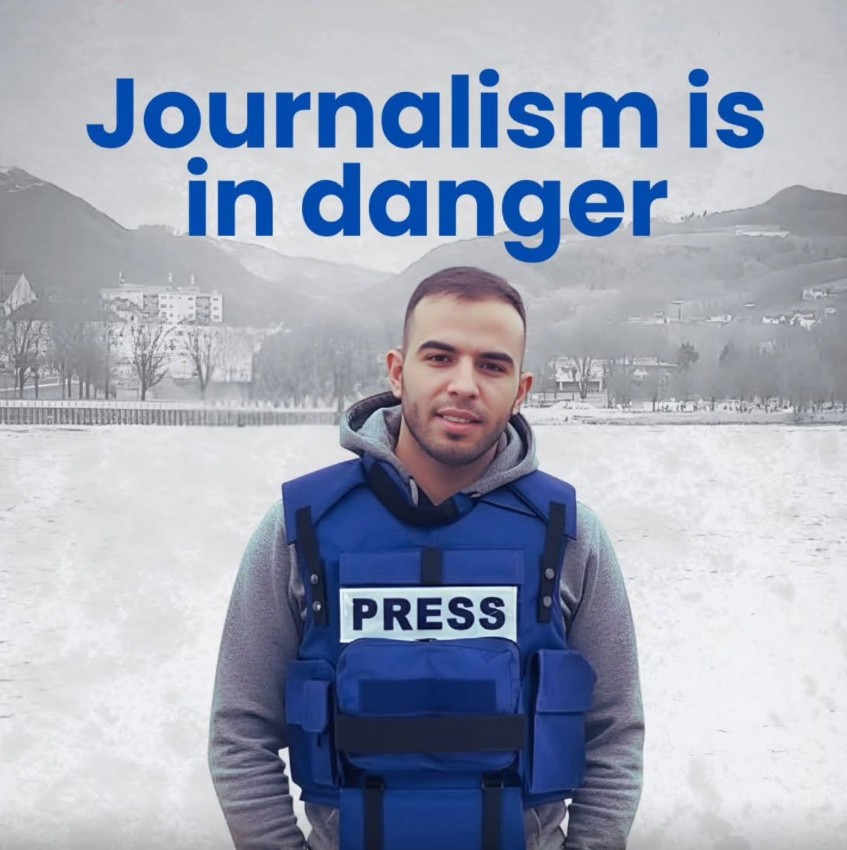
Van cel naar cel: verplaatsingen zonder grond of bewijs
Binnen 24 uur na zijn arrestatie werd Mustafa drie keer overgeplaatst tussen verschillende gevangenissen. Twee verzoeken van gevangenisdirecteuren om hem in een streng regime te plaatsen werden door de officier van justitie afgewezen wegens gebrek aan bewijs. Toch volgde opnieuw een overplaatsing ΓÇö zonder rechterlijke toetsing en zonder gemotiveerde beslissing.
Dit wijst op misbruik van bevoegdheden: directies beschikken over macht die wordt ingezet om Palestijnen te isoleren en psychisch te breken, buiten zicht van onafhankelijk toezicht.
Mentale uitputting als methode
Mustafa verblijft nu in de penitentiaire inrichting Vught, op de psychiatrische afdeling. Officieel ΓÇ£voor zorgΓÇ¥, maar feitelijk het gevolg van isolatie, verplaatsingen en gebrek aan contact. Zijn mentale gezondheid is volgens zijn advocaat ernstig verslechterd.
Tijdens een kort videogesprek met zijn broer zei hij: ΓÇ£Zorg goed voor mijn kind.ΓÇ¥
Stilte van mensenrechtenorganisaties
Wat deze zaak extra pijnlijk maakt, is de stilte van de internationale gemeenschap. Organisaties die zeggen op te komen voor mensenrechten en persvrijheid blijven opvallend afwezig. Waar blijft hun verontwaardiging wanneer het een Palestijn betreft? Waarom zwijgen diezelfde instellingen die elders moedig spreken?
Deze selectieve stilte ondermijnt het vertrouwen in universele mensenrechten. Als een Palestijnse journalist in Europa zonder transparante aanklacht wordt vastgehouden, zou dat overal alarmbellen moeten doen rinkelen.
De verantwoordelijkheid van Nederland
De Nederlandse autoriteiten ΓÇô en met name de directeuren van betrokken penitentiaire inrichtingen ΓÇô dragen directe verantwoordelijkheid voor zijn fysieke en mentale welzijn. Beslissingen over verplaatsing en regime worden nu genomen zonder transparante, onafhankelijke toetsing. Dat is onverenigbaar met rechtsstatelijke en mensenrechtelijke verplichtingen.
Wie beschermt de journalist?
- Onafhankelijk onderzoek naar de behandeling van Mustafa Ayyash en het machtsmisbruik door gevangenisdirecteuren.
- Onmiddellijke toegang voor familie en advocaat; beëindiging van isolatie en willekeurige verplaatsingen.
- Transparantie over de juridische basis van zijn detentie.
What Failed in Gaza Is Threatening to Happen in the Netherlands
The case of journalist Mustafa Ayyash exposes unchecked power inside the prison system
What Israel could not achieve in GazaΓÇöphysically destroying journalist Mustafa AyyashΓÇönow threatens to happen in the Netherlands through psychological exhaustion, isolation, and institutional abuse of power. Since his arrest on 19 September 2025, he has faced arbitrary transfers, visitation bans, and a regime with no transparent judicial basis.
Power without oversight: the arbitrary detention of Mustafa Ayyash
Palestinian journalist and activist Mustafa Moin Ayyash has been arbitrarily detained in the Netherlands despite being an independent journalist unaffiliated with any political or military group. As founder of Gaza Now, he has documented realities in Gaza, the West Bank, and Jerusalem for years.
During the war he lost more than forty family members and three family homes were destroyed. He continued his journalistic and humanitarian work nonetheless.
From cell to cell: transfers without grounds or evidence
Within 24 hours of his arrest he was transferred three times between facilities. Twice, requests by prison directors to place him under a terrorism regime were rejected by the public prosecutor for lack of evidenceΓÇöyet another transfer followed, without judicial review or a reasoned decision.
This points to an alarming abuse of discretionary power: directors using authority to isolate and psychologically break Palestinians out of public oversight.
Mental exhaustion as a method
Mustafa is currently held on the psychiatric ward of PI Vught. Officially ΓÇ£for careΓÇ¥, in practice the outcome of isolation, transfers, and lack of family contact. His mental health has severely deteriorated, according to his lawyer.
In a brief video call with his brother he said only: ΓÇ£Take good care of my child.ΓÇ¥
Silence of human rights organizations
What makes this case even more painful is the silence of the international community. Organizations that claim to defend human rights and press freedom are conspicuously absent. Where is their outrage when the journalist is Palestinian? Why do the same institutions that speak boldly elsewhere fall silent now?
Such selective silence undermines confidence in universal rights. If a Palestinian journalist is held in Europe without a transparent charge, alarm bells should be ringing everywhere.
Responsibility lies with the Netherlands
Dutch authoritiesΓÇöespecially the directors of the facilities involvedΓÇöbear direct responsibility for his physical and mental wellbeing. Decisions about transfers and regime are currently taken without transparent, independent review, which is incompatible with the rule of law and human rights obligations.
Who protects the journalist?
- Independent investigation into the treatment of Mustafa Ayyash and abuse of power by prison directors.
- Immediate access for family and counsel; end to isolation and arbitrary transfers.
- Transparency about the legal basis for his detention.
ما لم ينجح في غزة يوشك أن يحدث في هولندا
قضية الصحفي مصطفى عياش تكشف نفوذاً بلا رقابة داخل نظام السجون
ما عجزت إسرائيل عن تحقيقه في غزة—تدمير الصحفي مصطفى عياش جسدياً—يوشك أن يتحقق في هولندا عبر الإنهاك النفسي والعزل وإساءة استخدام السلطة المؤسسية. منذ اعتقاله في 19 سبتمبر 2025، يواجه عياش عمليات نقل تعسفية ومنع الزيارات ونظاماً بلا أساس قضائي شفاف.
سلطة بلا رقابة: الاحتجاز التعسفي لمصطفى عياش
يُحتجز الصحفي والناشط الفلسطيني مصطفى معين عياش تعسفياً في هولندا رغم كونه صحفياً مستقلاً غير منتسب لأي جهة سياسية أو عسكرية. وبصفته مؤسس Gaza Now وثّق لسنوات الواقع في غزة والضفة الغربية والقدس.
خلال الحرب فقد أكثر من أربعين فرداً من عائلته ودُمّرت ثلاثة منازل عائلية. ومع ذلك واصل عمله الصحفي والإنساني.
من زنزانة إلى أخرى: نقل دون أسس أو أدلة
خلال 24 ساعة من اعتقاله، نُقل ثلاث مرات بين سجون مختلفة. رُفضت طلبات لوضعه تحت «نظام الإرهاب» من قبل النيابة بسبب غياب الأدلة—ومع ذلك تلتها عملية نقل أخرى دون مراجعة قضائية أو تسبيب واضح.
يشير هذا إلى إساءة استخدام خطيرة للصلاحيات: يُستعمل نفوذ المديرين لعزل الفلسطينيين وكسرهم نفسياً بعيداً عن الرقابة.
الإنهاك النفسي كأسلوب
يُحتجز مصطفى حالياً في القسم النفسي بسجن فوخت. رسمياً «للعناية»، لكنه عملياً نتيجة العزل المتكرر وعمليات النقل وغياب التواصل مع أسرته. وقد تدهورت صحته النفسية بشدة وفقاً لمحاميه.
وفي مكالمة مرئية قصيرة مع شقيقه قال: «اعتنِ بطفلي جيداً.»
صمت منظمات حقوق الإنسان
ما يزيد هذه القضية ألماً هو صمت المجتمع الدولي. فالمنظمات التي تزعم الدفاع عن حقوق الإنسان وحرية الصحافة غائبة بشكل لافت. أين غضبهم عندما يكون الصحفي فلسطينياً؟ ولماذا تصمت المؤسسات التي تتكلم بشجاعة في أماكن أخرى؟
هذا الصمت الانتقائي يقوّض الثقة بـكونية الحقوق. إذا كان صحفي فلسطيني يُحتجز في أوروبا بلا اتهام شفاف، فيجب أن تُقرع نواقيس الخطر.
المسؤولية تقع على عاتق هولندا
تتحمل السلطات الهولندية—وخاصة مدراء السجون المعنية—المسؤولية المباشرة عن سلامته الجسدية والنفسية. إن اتخاذ قرارات النقل ونظام الاحتجاز دون مراجعة مستقلة وشفافة يتعارض مع سيادة القانون والالتزامات الحقوقية.
من يحمي الصحفي؟
- تحقيق مستقل في معاملة مصطفى عياش وإساءة استخدام السلطة من قبل مدراء السجون.
- تمكين التواصل الفوري مع عائلته ومحاميه؛ وإنهاء العزل وعمليات النقل التعسفية.
- شفافية كاملة بشأن الأساس القانوني لاحتجازه.